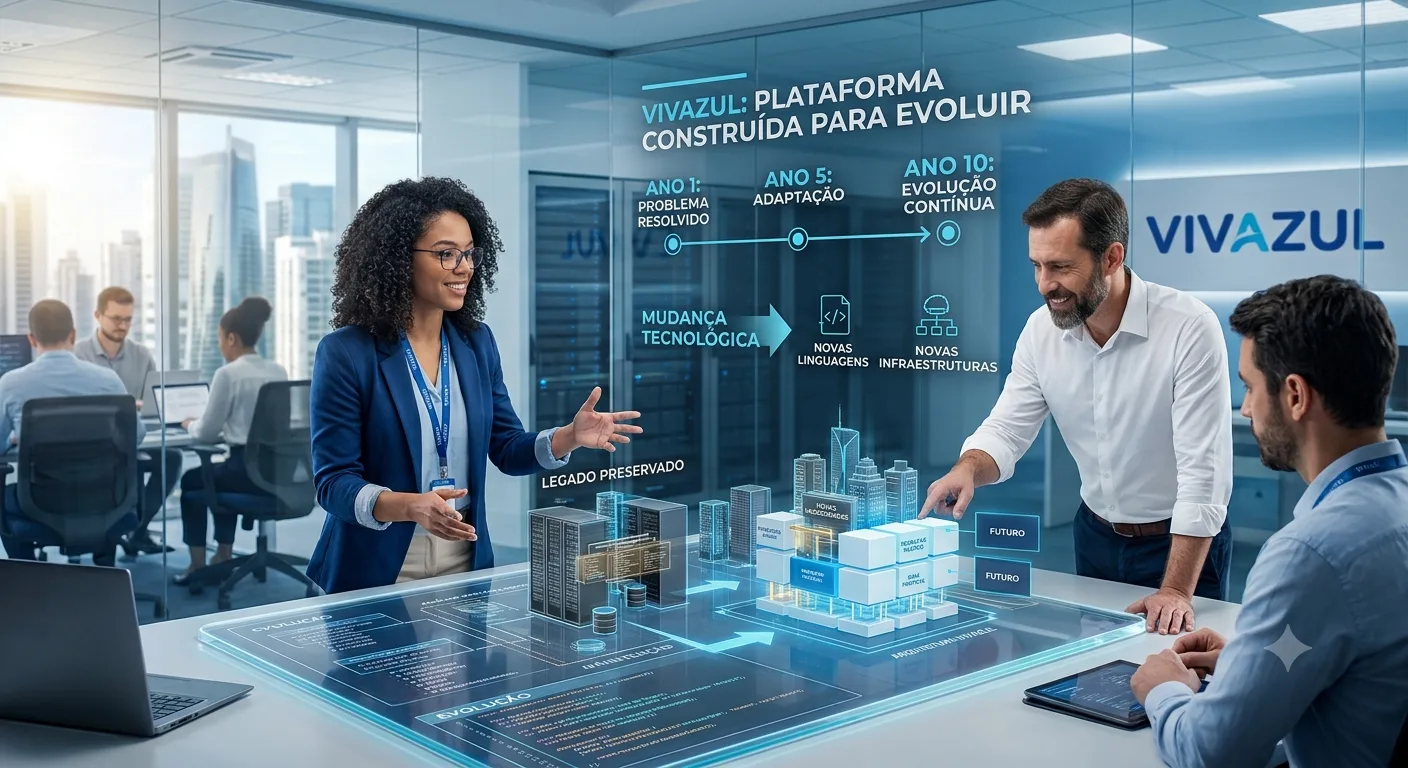
Every system is born to solve a problem. The challenge is to ensure it continues to solve that problem five or ten years later, even as technology changes, processes evolve, and new needs arise.
When I started developing Vivazul, this was the principle that guided all architectural decisions. My goal was not to create just another management system, but to develop a platform prepared for continuous evolution.
Architecture before functionalities
One of the most important decisions was to invest time in architecture before expanding the number of functionalities. Experience shows that adding features on a poorly structured base only increases complexity and reduces the software's capacity for evolution.
In Vivazul, each component has well-defined responsibilities, allowing new functionalities to be incorporated without causing significant changes to the rest of the platform.
Reverse engineering as a starting point
A large part of the knowledge incorporated into Vivazul was obtained through the analysis of already established systems in the market. This reverse engineering process did not aim to reproduce existing solutions, but to understand business rules, identify best practices, and recognize limitations found in traditional platforms.
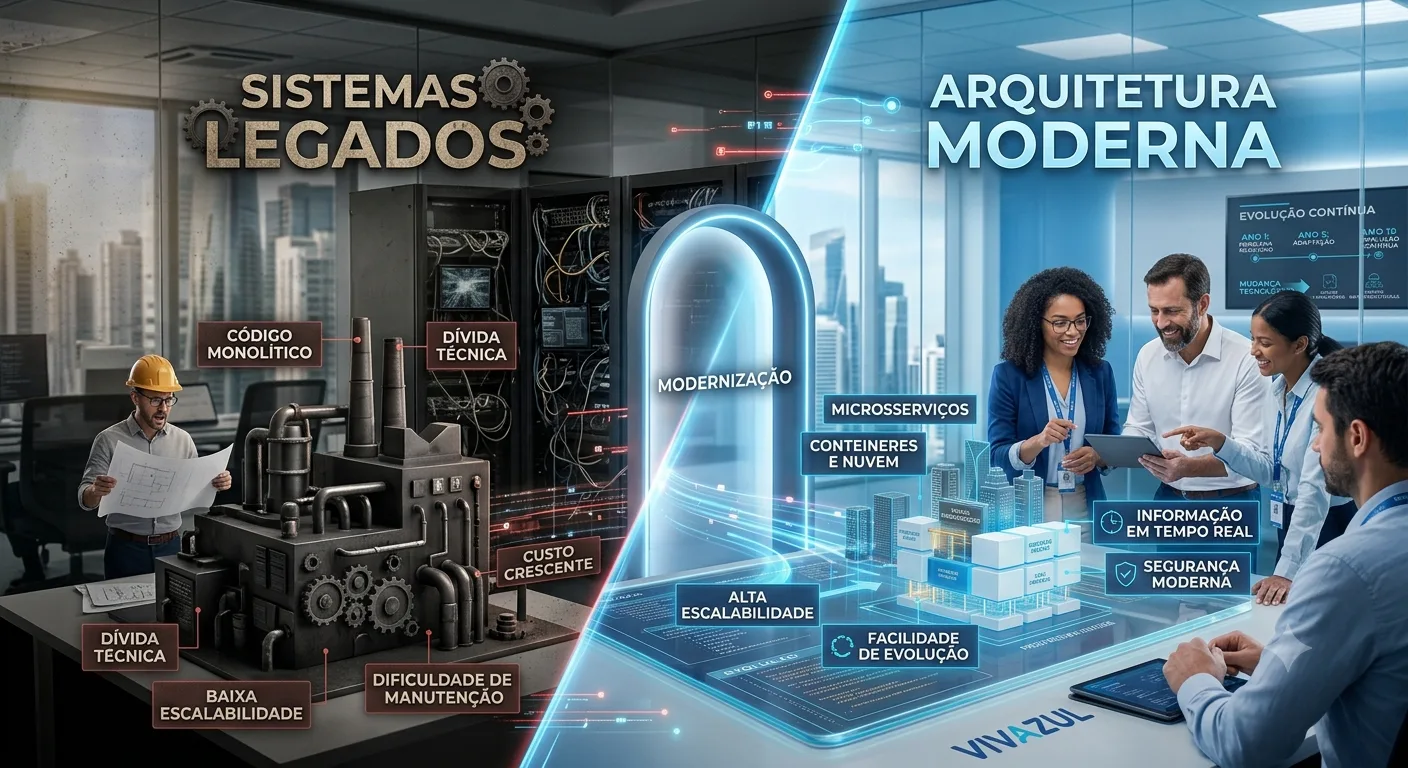
This study allowed for the construction of a modern architecture, preserving the knowledge accumulated over decades of corporate systems development while simultaneously eliminating restrictions imposed by older technologies and models.
Prepared to incorporate new technologies
A constant concern during the project was to avoid making the platform dependent on specific technologies. The architecture was designed to allow for the gradual incorporation of new features, external services, APIs, and artificial intelligence without requiring major restructuring.
This flexibility reduces the cost of software evolution and increases its lifespan, allowing it to keep up with technological changes much more securely.
Artificial Intelligence as part of the architecture
The arrival of artificial intelligence has profoundly changed the way we think about corporate applications. Therefore, Vivazul does not treat AI as an isolated resource, but as an architectural layer capable of supporting queries, organizing information, interpreting data, and enhancing user productivity.
This decision ensures that the platform is prepared to incorporate new capabilities as AI models evolve.
Software that keeps pace with organizational growth
I believe that good systems are not those that have more functionalities, but those that can evolve without losing organization. This philosophy guides my work as a software architect and is present in every decision made during the development of Vivazul.
More than just presenting a product, I consider the platform a permanent study on architecture, software engineering, and the construction of systems prepared for the future.
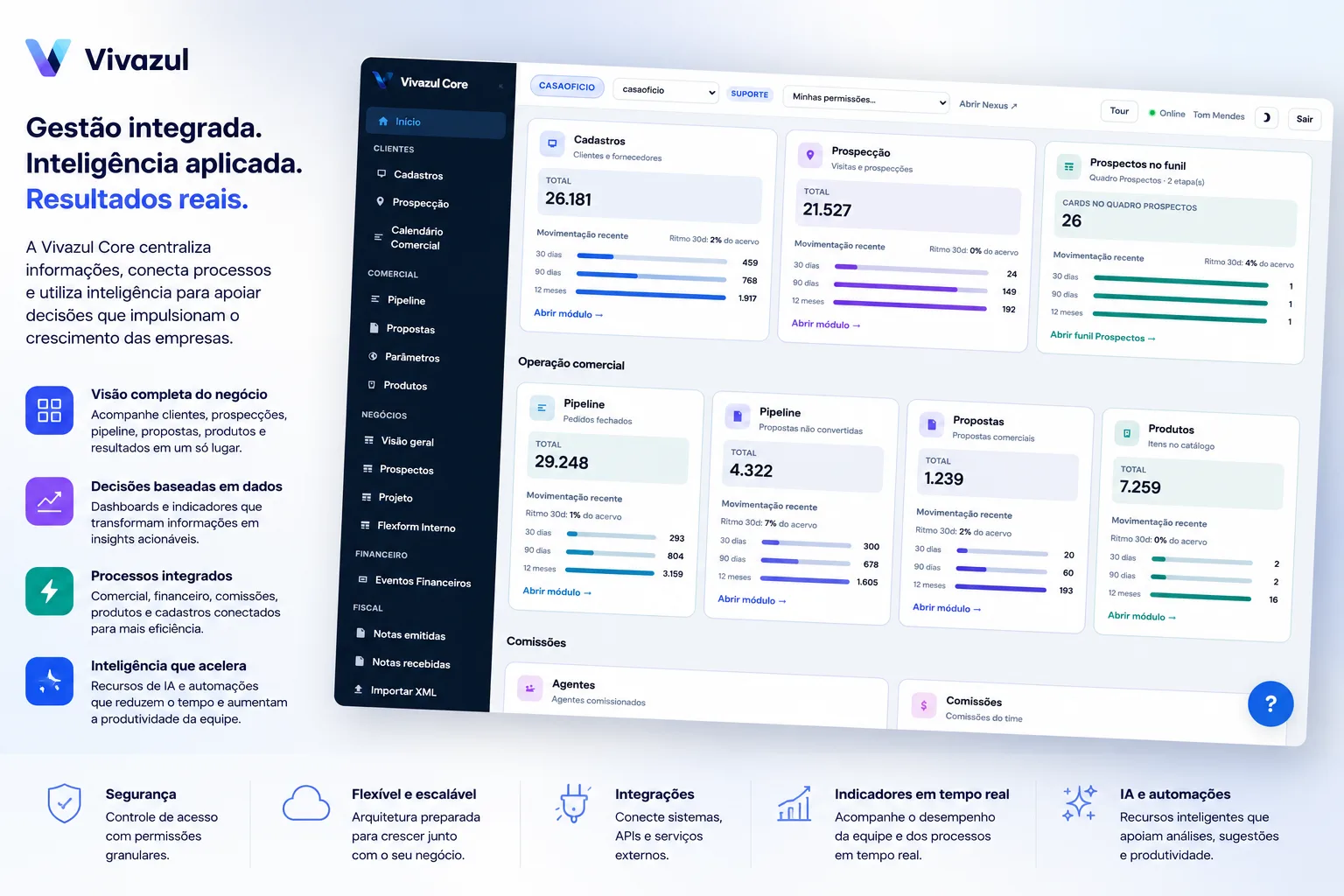
Vivazul represents much more than a corporate application. It materializes my way of thinking about software architecture: building solutions today that remain relevant tomorrow.