Many organizations need an institutional website or a technical portfolio with well-organized content, search, SEO, and an editing panel — without turning the project into a generic installation full of third-party extensions. This platform was born with this focus: to deliver a ready-to-use CMS, with a public site and an administrative area separated, designed for those who value control, clarity, and security.
This is not about competing with WordPress or replacing the ecosystem of blogs and stores built around it. It is an alternative for those who prefer a lean product, on demand, that can be customized to the client's domain.
Who it makes sense for
The current design serves well professionals, technical offices, agencies, and companies that need to publish articles, projects, institutional presentations, and legal pages, with support for multiple languages from the start.
Technology managers who want a predictable site, without a "plugin store" in the critical path
Teams that publish technical content and need well-defined SEO, sitemap, RSS, and metadata
Organizations that treat the administrative panel as a sensitive area — login, access limits, and auditing matter
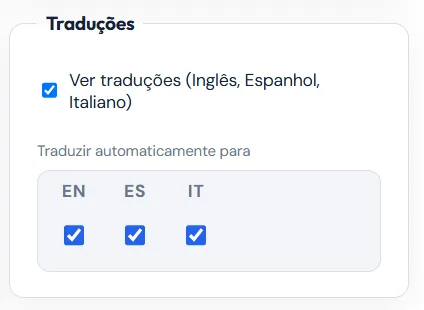
Those who need pt-BR, English, Spanish, and Italian in the same editorial flow
If your case is a megastore of themes and extensions, this is not the tool. If the case is a reliable, tailored portal with controlled evolution, it's worth having a conversation.
What the platform already delivers
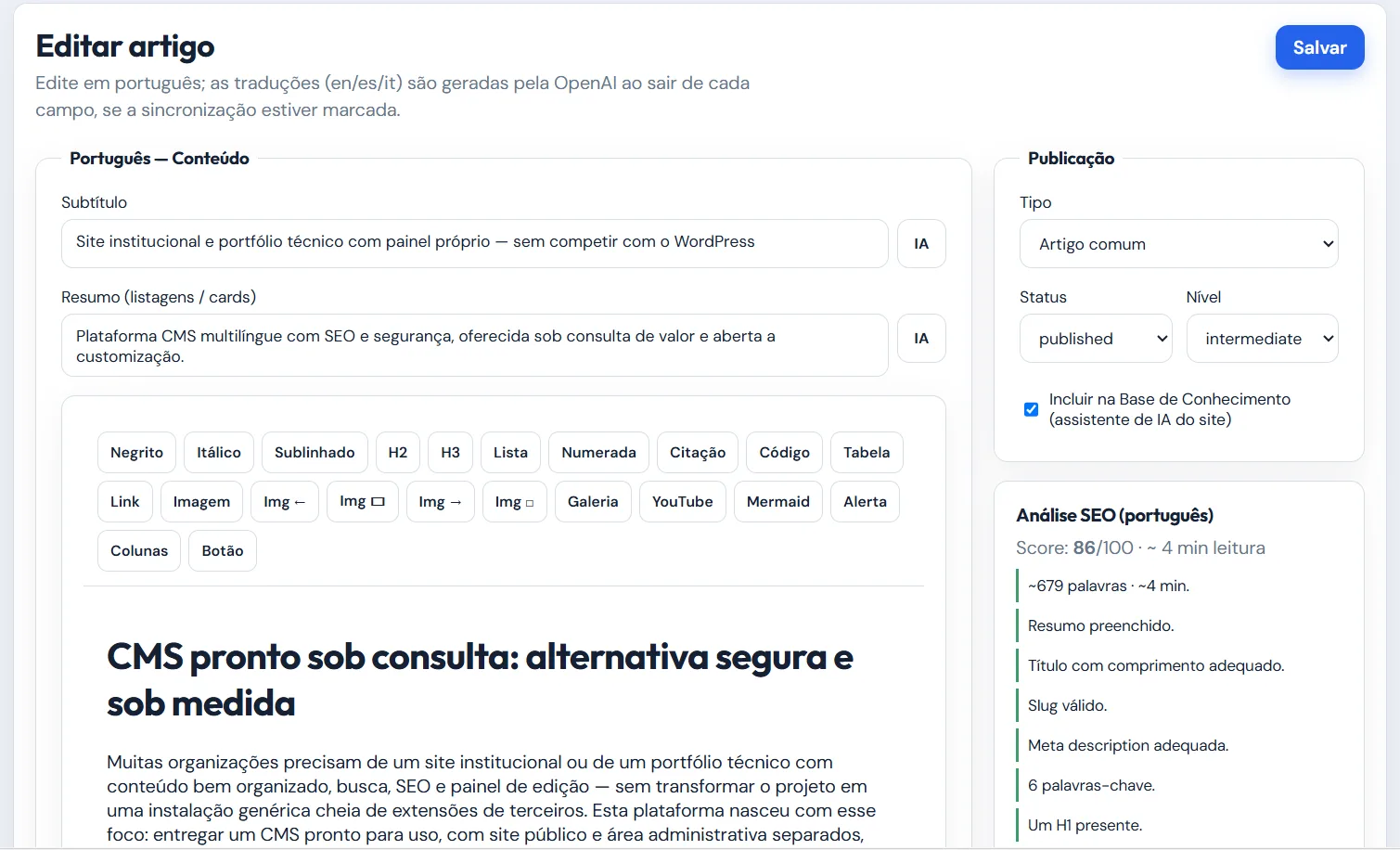
At the core, there are three pieces that work together: the API (business rules, authentication, and content), the CMS (editing and operation), and the public site (reading, performance, and indexing).
Editorial content with clear types: presentation, experience, projects, and articles
Rich editor (text, code, visual structures) and flow from draft to publication
Four languages in content and public routes
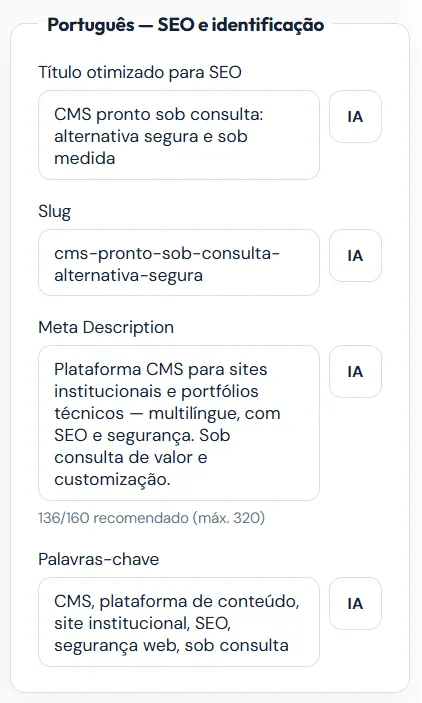
Technical SEO: meta, Open Graph, JSON-LD, canonical, sitemap, robots, and redirects
Site search, contact form, and Terms and Privacy pages
Cache, compression, and pre-render aimed at performance and Core Web Vitals
Backup and export for operational continuity
Assistant based on published knowledge (when you mark the content for that)
There is also SEO analysis before publishing and assisted translation in the panel, to speed up the maintenance of the four languages without abandoning human review.

Security as a requirement, not as an attachment
An open CMS to thousands of extensions solves many cases — and also increases the risk surface. Here the bet is different: smaller surface, dependencies under control, panel separated from the public site, authentication with tokens, header protection, rate limits, CSRF, and audit trail.
This does not eliminate the need for good hosting and update practices. However, it eliminates the constant pressure of "one more plugin to close a gap." Security is built into the product design, along with the rest of the architecture.
On demand value and customization
There is no public pricing table in this article. The value is defined on demand, according to the scope: base deployment, visual identity, integrations, business rules, hosting, and level of support.
The platform can be customized — new content types, approval flows, integrations with internal systems, layout and SEO adjustments — without pretending that a generic package covers all scenarios. The starting point is the ready-to-use CMS; the endpoint is what the organization really needs to operate.
If you already follow this portal, part of what you see live — presentation, experience, articles, and multilingual structure — is the same core offered on demand.
How to start the conversation
The most direct path is the contact form on this site. Describe the type of portal, necessary languages, if there is already content to migrate, and if there are integration or compliance requirements. From there, we align scope, timeline, and value.
In summary: this is a safe and tailored alternative for those who need a ready-to-use CMS — not a generic competitor to WordPress, but a focused, customizable product negotiated on demand.